How to Style an Outdoor Room: Layers, Textures, and the Finishing Touches That Make It Feel Like Home

February 27, 2026
Your Outdoor Room Deserves More Than a Table and Four Chairs
There's a moment every Waikato homeowner knows well - you've got a lovely covered outdoor space, the structure is sorted, the decking looks great, and then you pull out a few mismatched chairs and call it done. The space functions, sure, but it never quite feels like a room. It feels like a patio.
The difference between a patio and an outdoor room is styling - and it's simpler than most people think. The same layering principles that make an interior living room feel warm and inviting work just as well outside. You just need to choose materials and pieces that can handle the Waikato elements.
Here's how to approach it, layer by layer.
Start with a Rug: The Single Most Transformative Thing You Can Do
Interior designers will tell you that a rug anchors a room. It defines the space, signals where people should sit, and adds warmth underfoot. The same is true outdoors.
An outdoor rug placed under your seating group immediately makes the area feel intentional and considered. It visually separates the lounging zone from the surrounding deck or paving, and on a cool Waikato evening, it makes the whole space feel cosier.
Look for rugs made from polypropylene or recycled PET plastic - these materials are woven to look like natural fibres but handle moisture, UV, and foot traffic without fading or going mouldy. They can be hosed down, dried quickly, and won't harbour mildew over winter.
As a rule of thumb, go bigger than you think you need. A rug that's too small makes furniture look like it's floating. Aim for all front legs of your chairs or sofa to sit on the rug, or ideally the full furniture grouping.
Choose a Furniture Arrangement, Not Just Furniture
One of the most common styling mistakes in outdoor spaces is lining furniture up around the edges of the area - chairs pushed against walls or railings, everything facing outward. This is fine for a waiting room, but it kills conversation and connection.
Instead, arrange furniture the way you would indoors: facing inward, toward each other, with a coffee table or fire bowl as the focal point. A sofa facing two armchairs across a low table creates an inviting conversation circle. It draws people in and makes them want to stay.
For furniture materials, powder-coated aluminium is the workhorse of outdoor furniture - it's lightweight, rust-proof, and holds up well through Waikato's warm summers and wetter winters. Teak and hardwoods develop a beautiful silver-grey patina over time if left untreated, or can be oiled once a year to maintain their original warmth. Avoid untreated pine or softwoods outdoors - they deteriorate quickly.
Comfort matters more outdoors than people expect. Deep-seated chairs with proper back support encourage people to actually relax rather than perch. Cushions with UV-stabilised, water-repellent fabric (look for Sunbrella or similar) will hold their colour and shape for years rather than fading within a single season.
Layer in Textiles: Cushions, Throws, and Why They Matter
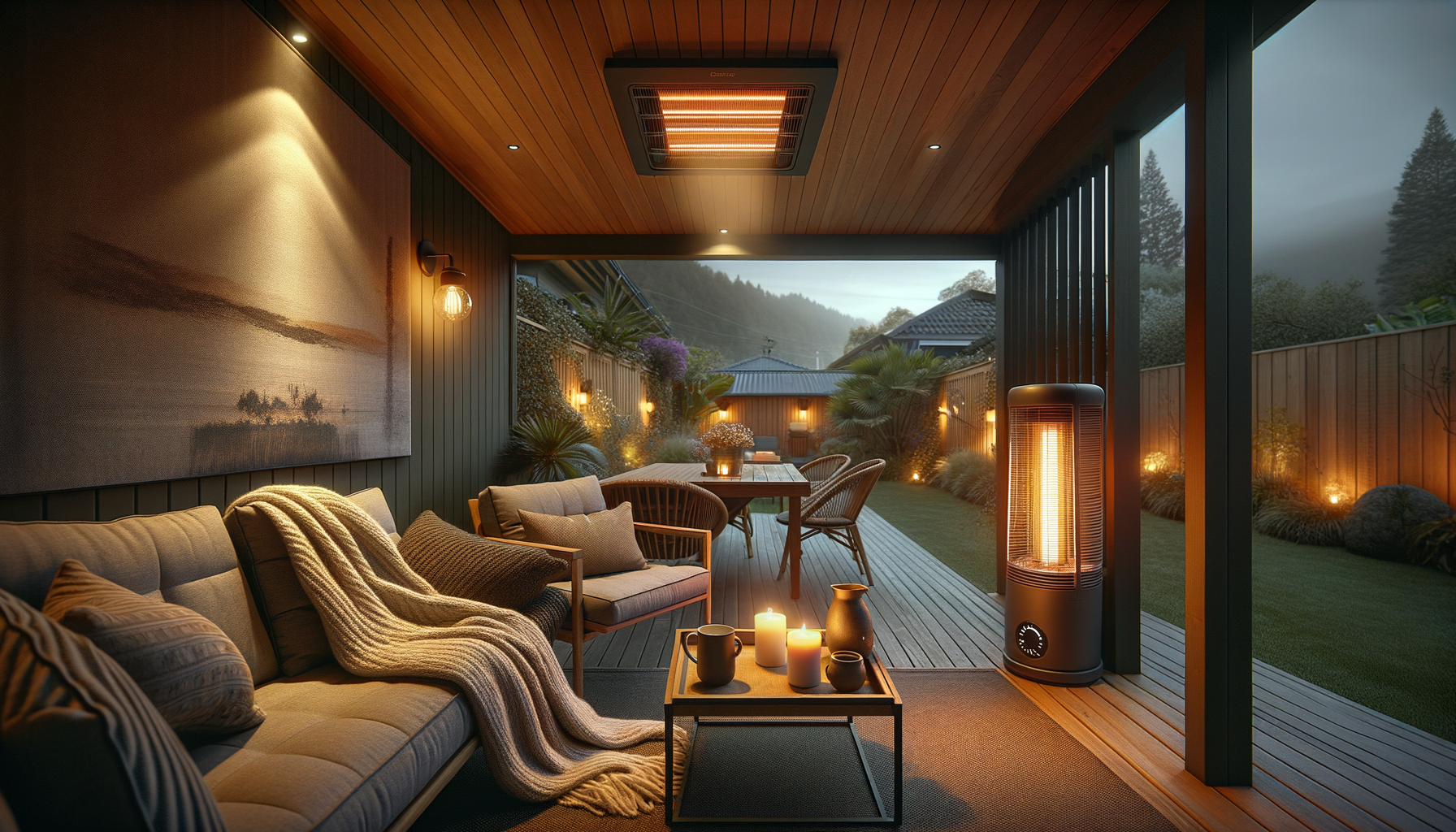
Textiles are where an outdoor space stops looking like outdoor furniture and starts looking like a room. Cushions in varying sizes and shapes, a throw draped over the back of a chair, a bolster pillow or two - these details read as lived-in and welcoming.
The trick is treating them exactly like interior soft furnishings: mix patterns and plains, vary the scale, and tie back to a consistent colour palette. Two or three colours work better than six. A neutral base with one or two accent colours feels cohesive without looking like a catalogue.
Outdoor fabrics have come a long way. Solution-dyed acrylic fabrics (where the colour is part of the fibre rather than applied as a dye) resist fading far better than standard polyester. Research shows UV-stabilised outdoor fabrics can retain colour for up to five years of direct sun exposure compared to standard fabrics, which can fade noticeably within a single summer.
Practically speaking, bring cushions inside on wet days or invest in a simple outdoor storage box. Even the best outdoor fabric will thank you for a little care.
Lighting: The Layer Most People Forget Until It's Dark
Outdoor spaces that look beautiful by day can feel flat and uninviting after sunset without the right lighting. And in Waikato, where summer evenings stretch out late and outdoor entertaining is very much a thing, this matters.
The goal is to avoid harsh overhead lighting - a single bright bulb in the centre of your pergola roof creates a clinical, carpark effect. Instead, layer light sources at different heights:
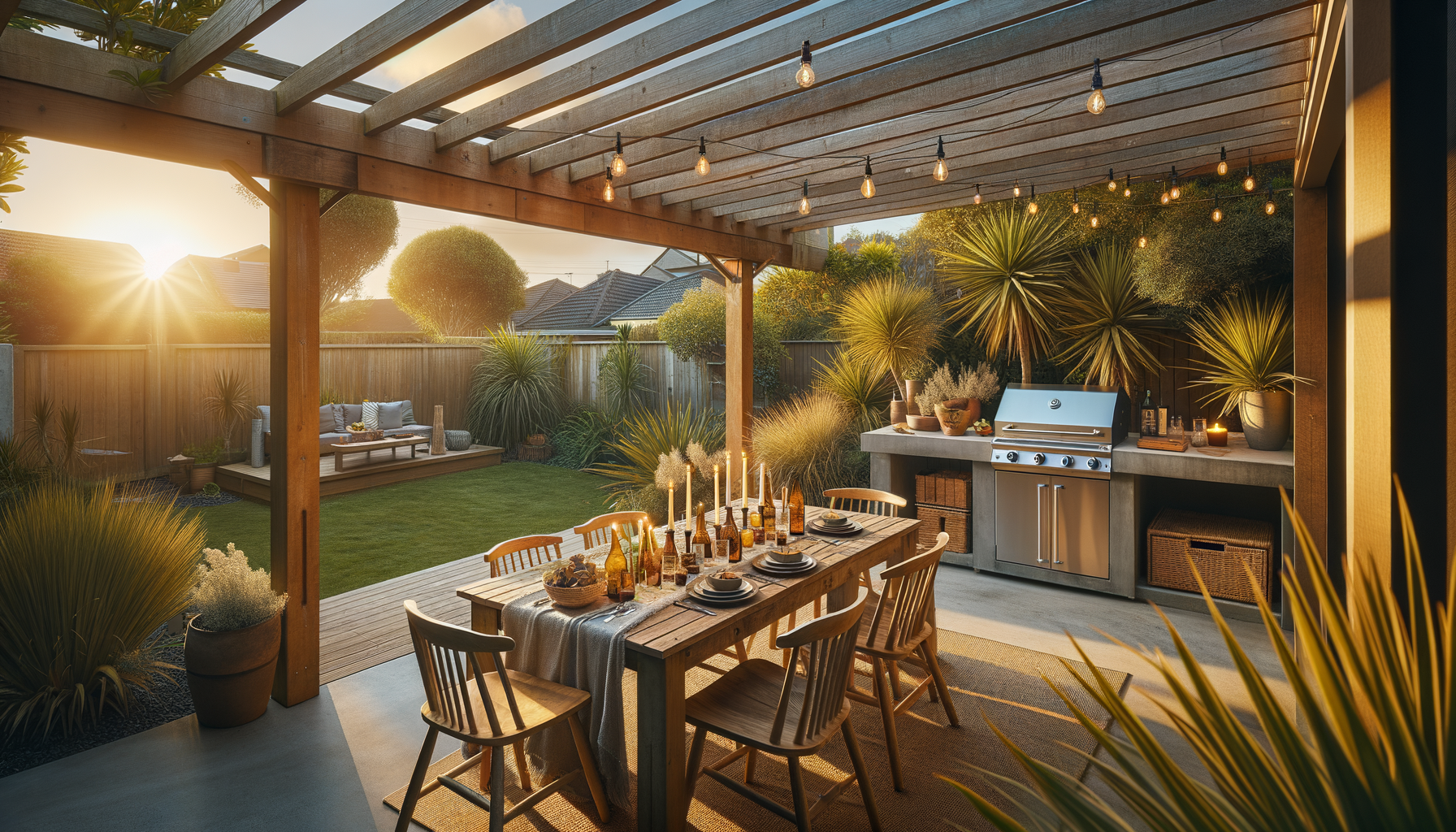
- Overhead warmth: String lights or festoon bulbs draped across the roof structure create that warm, celebratory glow that makes people feel instantly relaxed. Warm white (2700K-3000K) is the magic range - it flatters people and makes outdoor spaces feel golden and inviting.
- Table-level light: A lantern or two on a coffee table or side table adds intimacy and a sense of occasion, even when you're just having a quiet glass of wine.
- Ground or step lighting: Small pathway lights or recessed step lights add safety and a subtle architectural quality to the space after dark.
- Candles: Never underestimate a cluster of pillar candles or a storm lantern. The flickering quality of candlelight does something to a space that no electric bulb quite replicates.
Solar-powered and low-voltage LED options have improved significantly - many are now bright enough to be genuinely useful rather than merely decorative, and they eliminate the need for wiring.
Bring In Plants: The Living Layer
Plants are the layer that connects an outdoor room to the garden and landscape around it. They soften hard surfaces, add scale, introduce scent, and make the space feel genuinely alive.
For potted plants in an outdoor room, think in terms of scale and repetition. A pair of large architectural plants - think a standard Liriope, a sculptural Agave, or a bold NZ flax (harakeke) - flanking a seating area create a sense of entrance and enclosure. Smaller pots clustered in odd numbers on a side table or corner shelf add detail without clutter.
If your outdoor room has a roof or pergola, trailing or climbing plants can soften the structure beautifully. Jasmine is a classic choice for Waikato gardens - it's relatively easy to manage and the scent on a warm evening is extraordinary. Native climbing plants like Clematis paniculata (puawhananga) offer a wonderful burst of white flowers in spring.
Practicality matters here too. Choose low-maintenance species that can handle the particular microclimate of your outdoor room - whether that's full shade under a solid roof, dappled light through a louvre system, or exposed afternoon sun. Under-watering and overwatering are both easier to do with potted plants, so self-watering pots are worth considering if you're often away or busy.
The Focal Point: Give the Eye Somewhere to Land
Every well-styled room - inside or out - has a focal point. Something the eye travels to first, that sets the mood for the whole space. Outdoors, this might be:
- A fire bowl or tabletop fire feature that draws people around it and extends evening use through the cooler months
- A large piece of outdoor-rated artwork or sculpture that adds personality and visual interest
- A feature planter with a statement plant - an olive tree, a standard rose, or a bold NZ native
- A view that you deliberately frame with your furniture arrangement, directing sightlines out to the garden or landscape
The focal point doesn't need to be expensive or complicated - it just needs to be deliberate. Choosing it first often makes arranging everything else much simpler.
A Note on Cohesion: Indoor and Outdoor Should Speak the Same Language
One of the hallmarks of a beautifully styled outdoor room is that it feels connected to the house, not separate from it. When you look from the kitchen or living room out through the glass doors, the outdoor space should feel like a natural continuation - same general colour family, similar quality of materials, a consistent aesthetic register.
This doesn't mean everything has to match exactly. It means the outdoor space shouldn't look like a different house. If your interior is warm, neutral, and relaxed, your outdoor palette should echo that. If your interiors are modern and graphic, carry some of that confidence outside.
Paying attention to this connection between indoors and outdoors is what transforms a covered outdoor space from a functional addition into a genuine extension of your home - a room that simply happens to be outside.
The Finishing Touches That Pull It All Together
Once the big layers are in place - rug, furniture, textiles, lighting, plants, focal point - it's the small finishing touches that make a space feel personal and complete:
- A side table within arm's reach of every seat (nowhere to put your drink is a real comfort failure)
- An outdoor-rated mirror to bounce light and make a smaller space feel larger
- A simple tray or bowl on the coffee table to gather remotes, matches, or small objects without looking untidy
- A stack of books or a potted herb within reach of a kitchen outdoor area
None of these things are expensive. But together, they signal that the space is cared for, thought about, and genuinely used - which is exactly the feeling that makes an outdoor room worth spending time in.
Start with one layer, get it right, then add the next. Your outdoor room will thank you for the attention.