Getting the Most from Your Outdoor Space All Year Round in Taranaki

February 27, 2026
Taranaki Weather: Beautiful, But You Need a Plan
Anyone who's lived in Taranaki knows the deal. You can have four seasons in a single afternoon. The maunga creates its own weather systems, the westerlies roll in off the Tasman, and summer doesn't always get the memo that it's supposed to be warm. It's part of what makes this region so lush and green - but it also means your outdoor living space needs a little more thought than somewhere like Hawke's Bay or Nelson.
The good news? With some straightforward seasonal maintenance and a few smart habits, your outdoor room can be a genuinely functional and enjoyable space in every month of the year - not just the two weeks of perfect summer weather in January.
What the Taranaki Climate Actually Does to Outdoor Spaces
Before diving into the seasonal tips, it's worth understanding what you're working with. Taranaki receives an average of around 1,500mm of rainfall annually in New Plymouth - more in elevated or western-facing areas. UV levels during summer are high, often reaching extreme on the UV index. And the wind - particularly on the coast and around Egmont - is a constant factor.
This combination of moisture, UV exposure, and wind creates a specific set of challenges for outdoor materials:
- Timber decking and structures are vulnerable to moisture penetration, mold, mildew, and UV bleaching if not properly maintained.
- Metal components - particularly on the coast from Oakura to Urenui - face accelerated salt-spray corrosion.
- Outdoor fabrics and blinds can develop mildew if they stay damp for extended periods.
- Outdoor furniture can fade, warp, or deteriorate much faster than the manufacturer's estimates suggest if left exposed year-round.
None of this is cause for alarm - it's just useful context for building your seasonal maintenance habits.
Spring: Set Yourself Up for a Great Summer
Spring in Taranaki is often stunning - the region's gardens are world-class for a reason. But it's also the most important time to get your outdoor space ready. After a wet winter, there's usually work to do.
The spring outdoor space checklist
- Deep clean your deck or paved area. Winter encourages algae and mildew growth, especially on north-facing decks that get morning frost or areas shaded by trees. A deck cleaner specifically designed for your material type (timber or composite) will do a far better job than a plain hose-down. Avoid high-pressure blasting on timber - it can raise the grain and accelerate weathering.
- Inspect your deck structure. Get down and look underneath if you can. Check for soft spots in boards, loose fasteners, and any signs of moisture getting into the structure. It's far easier to replace one or two boards in spring than to deal with structural failure mid-summer.
- Re-oil or re-seal timber surfaces. Most outdoor timber in New Zealand benefits from an annual application of quality decking oil or sealant, ideally applied when temperatures are consistently above 10 degrees. Spring is the sweet spot - warm enough for the product to penetrate properly, but before the summer sun bakes the surface dry.
- Check and clean outdoor blinds and shutters. Use a soft cloth and mild soapy water - nothing abrasive or chlorine-based, which can damage surfaces. Pay attention to the operating mechanisms too. Hinges, tracks, and rollers benefit from a light lubrication to keep things moving smoothly.
- Bring outdoor furniture out of storage and give it a proper clean before use. Check that any aluminium frames are free of oxidation, and that fabric cushions are dry before they go back on.
Summer: Protecting Your Space from UV and Heat
On those glorious Taranaki summer days with the maunga out and the sea sparkling, your outdoor space earns its keep. But summer also brings real risks to your outdoor materials that are easy to underestimate.
New Zealand's UV levels are significantly higher than comparable latitudes in the northern hemisphere - a consequence of our cleaner atmosphere and closer proximity to the sun during summer. This matters because UV radiation is one of the primary causes of fading, brittleness, and surface degradation in outdoor materials.
Smart summer habits
- Use shade strategically. If your outdoor area has adjustable louvres or a retractable blind system, get into the habit of using them during the peak UV period between 10am and 4pm. This protects both your furniture and any people using the space.
- Don't let cushions bake. Outdoor cushion fabrics are UV-stabilised but not UV-proof. Storing cushions out of direct sun when not in use - even just under a cover - will significantly extend their life.
- Watch for moisture under furniture. Surprisingly, summer can be tough on decks because outdoor furniture left in one spot traps moisture, creates shading, and prevents the deck from drying evenly. Move furniture periodically to avoid uneven weathering and potential mold growth beneath legs and frames.
- Keep an eye on timber joints and gaps. Timber expands and contracts with heat and humidity. Summer can reveal gaps or movement that wasn't obvious in winter - note anything that looks unusual for attention in autumn.
Autumn: The Most Important Season for Long-Term Care
Autumn is genuinely the most critical time for outdoor space maintenance - and the most overlooked. Most homeowners think of this as wind-down time, but the preparation you do in autumn directly determines how well your outdoor space weathers the winter ahead.
Autumn priorities
- Clear leaves and debris promptly. Wet leaves sitting on a deck are one of the fastest ways to encourage mold growth and surface staining. In Taranaki where autumn rainfall can be persistent, check your deck weekly and clear any organic matter before it breaks down on the surface.
- Check drainage. Make sure water can drain freely off your deck and paved areas. Blocked drainage channels or low spots where water pools will cause ongoing problems through winter. This is also a good time to check that your outdoor roof or pergola gutters are clear.
- Apply a final coat of sealant to timber if needed. If your deck's last oiling was more than a year ago and you can see the surface is starting to look dry or grey, a quick re-application in early autumn before the wet sets in can make a real difference to how the timber handles winter moisture.
- Store or cover furniture cushions and soft furnishings. Don't leave these exposed through a Taranaki winter - even quality outdoor fabrics will deteriorate far faster than they should if left wet and cold for months.
- Inspect and service any mechanical components. Motorised louvres, automated blinds, and sliding door systems all benefit from a check before winter. Make sure sensors are working, mechanisms are lubricated, and everything closes and seals properly - you'll rely on these features far more in winter than summer.
Winter: Using Your Space Through the Cold Months
Here's something worth knowing: a well-designed outdoor room in Taranaki shouldn't be abandoned in winter. With the right setup, it can be a genuinely enjoyable extension of your home even in July.
The key is managing the two main winter challenges: moisture and cold. An outdoor space that stays dry and sheltered is far more usable than one that's exposed to every rain shower.
Winter usability tips
- Manage ventilation carefully. Closing your outdoor space completely traps moisture and encourages mold. The goal is shelter from rain and wind while maintaining enough airflow to keep surfaces dry. Louvre systems are particularly useful here because you can adjust the slat angle to deflect rain while still allowing air movement.
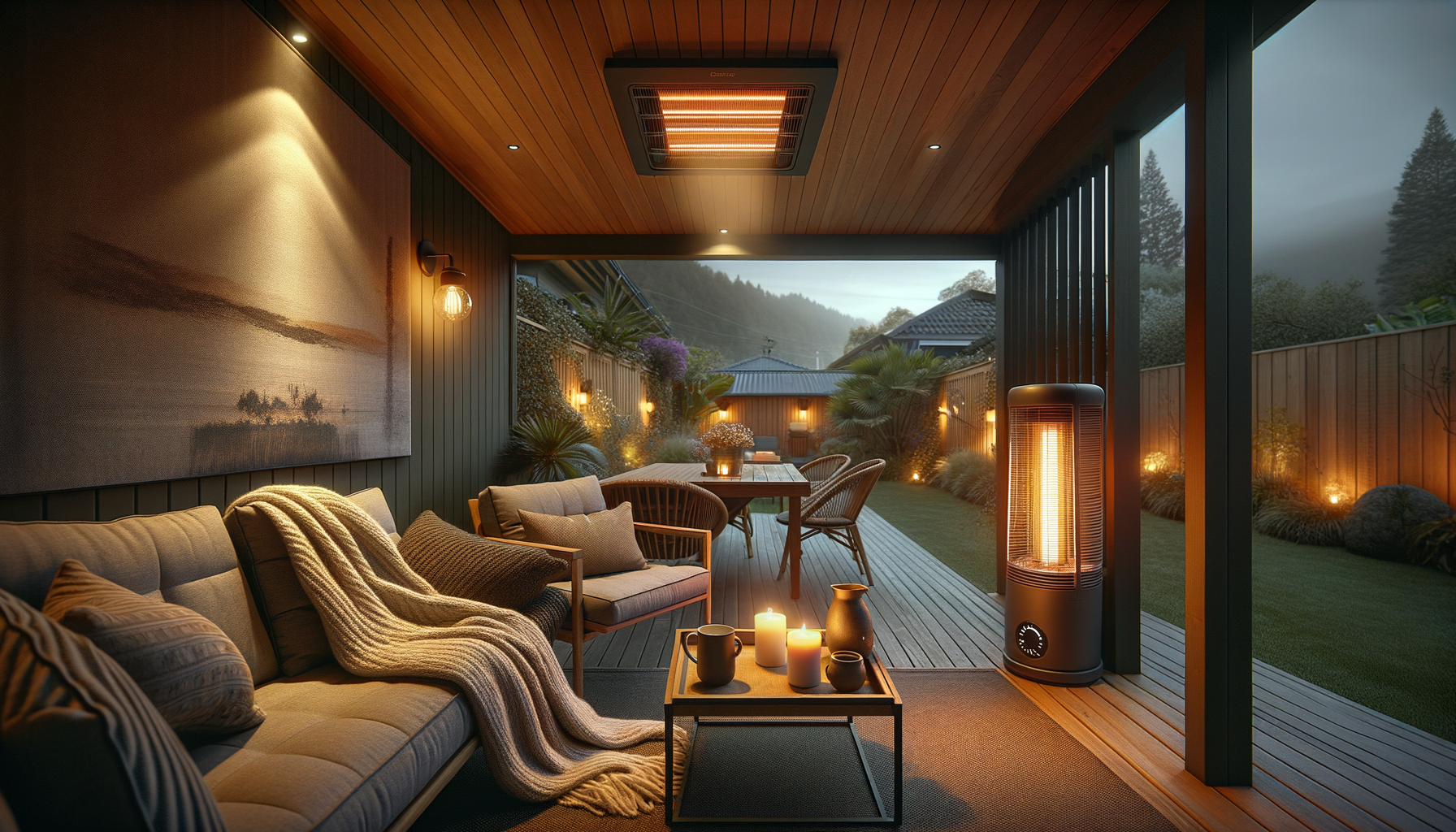
- Consider a portable outdoor heater. Even a modest patio heater extends the comfortable temperature range considerably. Infrared heaters are generally more efficient than convection-style heaters outdoors because they warm people and surfaces rather than air that immediately blows away.
- Check after storm events. Taranaki winters can produce significant wind and rain events. After any substantial storm, do a quick check of your deck, structure, outdoor roof, and any screening for damage, debris accumulation, or fasteners that may have worked loose.
- Keep it clean. A monthly sweep and rinse through winter keeps organic matter from building up and makes the spring clean-up far less daunting.
Coastal Considerations: From Oakura to Waitara
If your property sits near the Taranaki coastline, salt spray is an additional factor that deserves specific attention year-round - not just seasonally. Salt accelerates corrosion in metal components and can damage finishes on outdoor furniture and structures over time.
The simple answer is more frequent rinsing. A quick hose-down of metal components, glass surfaces, and outdoor structures after periods of strong onshore wind removes salt residue before it has time to cause damage. For properties within a few hundred metres of the sea, this is worth doing monthly at minimum - fortnightly is better during winter when storms are more frequent.
When replacing fasteners, hinges, or hardware in coastal properties, always specify marine-grade stainless steel (316 grade, not 304). The cost difference is minimal but the performance difference in a salt environment is significant.
A Simple Year-Round Mindset
The homeowners who get the most from their outdoor living spaces aren't necessarily the ones with the most expensive setups - they're the ones who treat their outdoor space with the same care they'd give to the interior of their home. Regular small maintenance tasks prevent the kind of large-scale deterioration that requires expensive repairs or replacement.
In Taranaki especially, working with the climate rather than against it makes a real difference. Understanding the seasonal patterns - the wet autumns, the UV-intense summers, the windy winters - and building simple habits around them turns a potentially frustrating maintenance burden into a routine that protects a genuinely valuable investment.
Your outdoor room should be a place you actually use and love, not just an aspiration on a sunny day. With a bit of seasonal attention, there's no reason it can't be both.