How to Set Up an Outdoor Entertaining Space You'll Actually Use All Year
February 27, 2026
The Outdoor Room That Never Gets Used
Sound familiar? You've got a lovely deck or patio, a decent outdoor setting, maybe even a BBQ - but somehow the outdoor space only gets used on perfect summer evenings. The rest of the time, it's just out there, quietly gathering leaves.
For a lot of Manawatu homeowners, the problem isn't enthusiasm for outdoor living. It's that the space hasn't been set up to handle the reality of our climate. Palmerston North and the surrounding region can deal out some brisk winds, unpredictable spring rain, and summer afternoons where the sun is fierce one minute and you're reaching for a jacket the next.
The good news is that with a bit of planning, outdoor entertaining spaces can genuinely become the most-used room in your home - not just a seasonal luxury. Here's what actually makes the difference.
Start With Shelter (It Changes Everything)
The single biggest upgrade you can make to an outdoor entertaining space is adequate overhead shelter. Not a shade sail (which does little in wind or rain) but a solid, permanent roof structure of some kind.
Why does this matter so much? Because shelter is what unlocks year-round use. Without it, every gathering is weather-dependent. With a proper roof overhead, light rain, summer heat, and even a bit of chill become manageable rather than entertaining-cancelling events.
There are a few approaches worth understanding:
- Fixed roof pergolas - provide consistent, permanent protection. Great for defined spaces like dining areas where you want reliable shelter without thinking about it.
- Louvre roof systems - these feature adjustable aluminium blades that rotate to control sun, airflow, and rain protection. You can have them fully open on a gorgeous Manawatu summer day and fully closed when a southerly rolls in. Many modern systems have motorised controls and weather sensors that adjust automatically.
- Glass roof structures - let in natural light while keeping rain out, creating a bright, protected space that still feels connected to the outdoors.
Whichever direction you go, aim to have the shelter cover your entire primary entertaining area - not just part of it. Partial coverage is a common mistake that still leaves guests scrambling when the weather turns.
Get Your Layout Right Before You Buy Furniture
One of the most practical things you can do before spending money on outdoor furniture is to work out your zones. Think of your outdoor space the way you'd think of an open-plan kitchen and living room - different activities need different areas.
For most Kiwi households, three zones work well:
- Dining zone - a proper table and chairs, ideally positioned under your main shelter where guests can eat comfortably regardless of conditions.
- Cooking zone - your BBQ or outdoor kitchen setup, located close enough to the dining area to be practical but positioned so smoke drifts away from guests.
- Lounge zone - comfortable seating for relaxed conversation, a morning coffee, or an evening drink. This can be slightly separate from the main entertaining hub, giving your space a bit of depth.
Once you've mapped out your zones, measure them carefully before buying furniture. Oversized outdoor settings are one of the most common mistakes - they make the space feel cramped and leave no room to move around comfortably.
As a general guide, allow at least 90cm of clearance around a dining table so people can push back chairs and move freely.
Think About Wind, Not Just Rain
In the Manawatu, wind is often more of a practical challenge than rainfall when it comes to outdoor entertaining. A good overhead shelter handles rain beautifully, but a howling nor'wester or southerly still makes it miserable to sit outside.
Adding some form of wind protection on exposed sides can completely transform the usability of your space. Options worth considering:
- Outdoor privacy shutters - solid or louvred panels that attach to pergola posts and block wind while adding privacy. Many are adjustable, so you can open them up on calm days.
- Outdoor roller blinds - a more flexible option that rolls up when not needed and comes down to block wind and low afternoon sun. They're particularly good on the western and southern sides of an entertaining area.
- Glass balustrades or screens - these block wind without blocking light or views, keeping your space feeling open even when they're providing real protection.
- Strategic planting - established hedges or rows of native screening plants (like Pittosporum or flax) on the windward side of your property can make a significant difference over time. It takes a few seasons but it's a low-cost, natural solution.
Lighting Makes or Breaks Evening Entertaining
Good outdoor lighting is one of the most underrated elements of an entertaining space. Get it right and your outdoor area feels warm and welcoming well into the evening. Get it wrong - or not bother at all - and you're eating by a single overhead spotlight that makes everything feel like a car park.
A layered approach works best:
- Ambient lighting - string lights or warm overhead LED panels create a soft, general glow that sets the mood. String lights in particular are inexpensive, easy to install, and genuinely transform an outdoor space at night.
- Task lighting - brighter, focused light where you actually need it: over the BBQ, over the dining table, and near steps or changes in level for safety.
- Accent lighting - low-level lights along pathways or uplights around garden plants add depth and interest without being harsh.
If you're installing new lights, it's worth having an electrician run proper outdoor-rated circuits rather than relying on extension cords and outdoor power boards. It looks cleaner and it's significantly safer.
Solar-powered pathway and garden lights have improved enormously in quality over recent years and can supplement your main lighting without any wiring at all.
Warmth Extends Your Season
New Zealand evenings cool down quickly once the sun drops, even in summer. Having a reliable heat source in your outdoor entertaining area can easily extend your season by two or three months - both into autumn and out from late winter.
The most practical options:
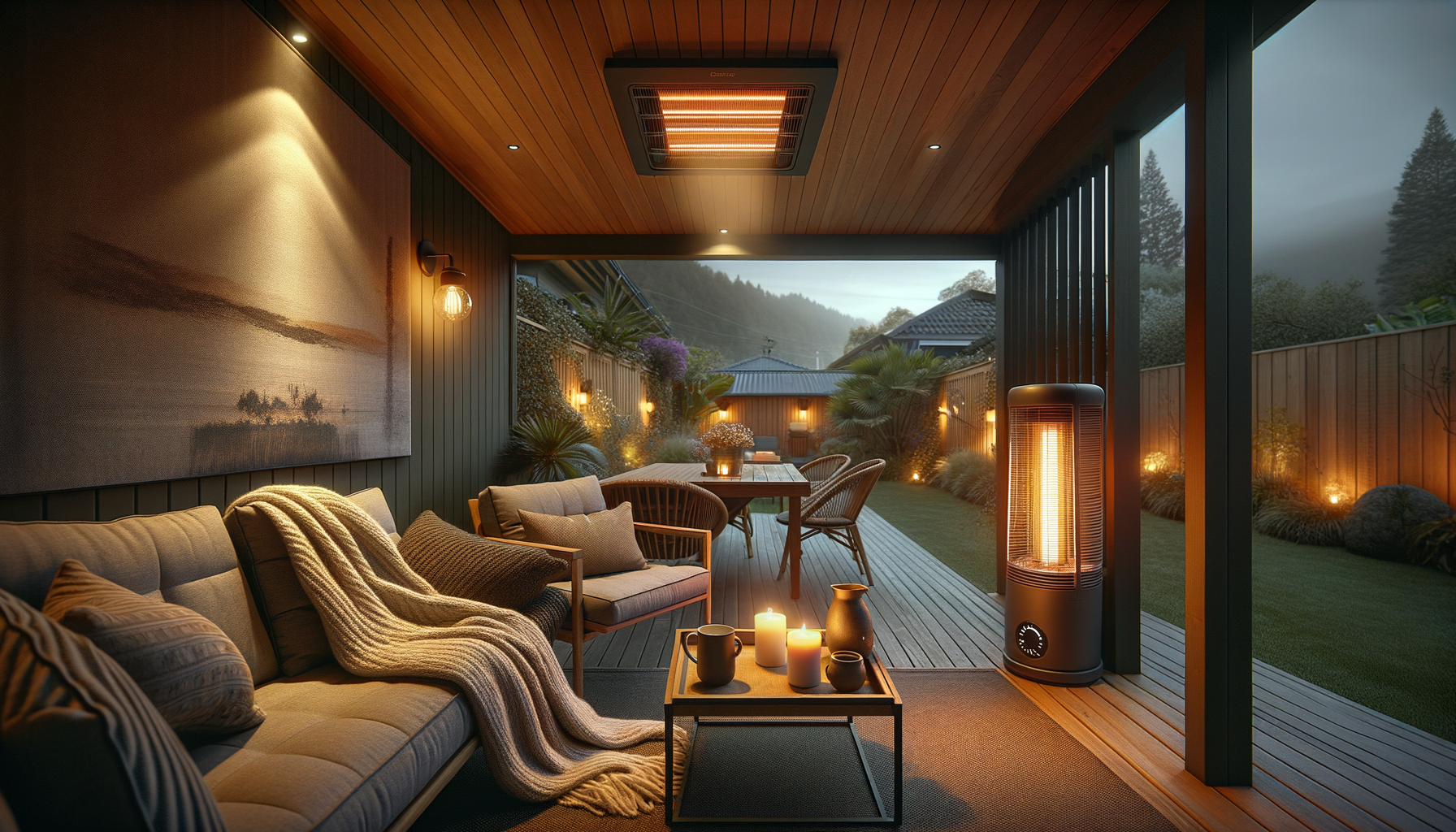
- Infrared heaters - ceiling or wall-mounted infrared panels are efficient and effective under a covered pergola. Unlike convective heaters, they warm people and surfaces directly rather than trying to heat the air (which disappears the moment there's any breeze). They're also neat and out of the way.
- Fire features - whether a built-in gas fire, a wood-burning fireplace, or even a portable fire pit, there's something about an open flame that draws people together and makes an outdoor space feel genuinely cosy. A contained fire feature is particularly lovely on a crisp Manawatu autumn evening.
- Portable propane heaters - not the most stylish option, but practical, flexible, and effective for smaller spaces or situations where you don't want a permanent installation.
The Details That Guests Actually Notice
Once your structure, layout, and practical elements are sorted, a few smaller touches make a big difference to how comfortable and inviting the space feels.
- Outdoor rugs - a good quality outdoor rug under your dining or lounge setting anchors the space and adds warmth underfoot. Make sure it's rated for outdoor use and elevated slightly so water drains through.
- Throws and cushions - keep a basket of outdoor-rated throws nearby. As temperatures drop in the evening, guests who are comfortable stay longer. This sounds simple, but it genuinely makes a difference.
- Convenient outdoor storage - a weatherproof storage box or cabinet near the entertaining area means you're not running back and forth to the house for extra plates, sunscreen, or mosquito coils. It keeps the space functional without clutter.
- Greenery and planting - potted plants bring an outdoor space to life in a way that furniture alone can't. Native New Zealand species like flax, kowhai, and various Hebe varieties are hardy, low-maintenance, and look great in large pots. They're also a natural fit for the Manawatu environment.
A Simple Test to Check Your Space Is Ready
Before you call your space truly entertaining-ready, try this: imagine hosting a dinner on a typical Manawatu evening in April. Ask yourself:
- Would your guests be protected from wind and any light drizzle?
- Is there enough light to eat comfortably once it gets dark?
- Is there a heat source to keep people comfortable as the temperature drops?
- Is there enough space for guests to move around without bumping into each other?
- Does the space feel inviting and comfortable, not just functional?
If you can answer yes to all five, you've got a space that'll genuinely get used. If there are gaps, you now know exactly where to focus your attention.
Outdoor entertaining doesn't need to be complicated or expensive to be brilliant. It just needs to be set up thoughtfully - and once it is, you'll wonder how you ever managed without it.