Timber vs Composite Decking: What Taranaki Homeowners Need to Know
March 2, 2026
The Decking Dilemma: Why the Choice Matters More Than You Think
If you're planning a new deck or replacing an existing one, you've probably already noticed how quickly the options multiply. Timber or composite? Pine or hardwood? Capped or uncapped composite? It's enough to make your head spin before you've even thought about size or layout.
Here in Taranaki, the decision deserves some careful thought. The region's mix of mild coastal air, high rainfall, and those unpredictable bursts of humidity and wind means your deck is going to face a real workout over the years. The material you choose will determine how much time you spend maintaining it, how it looks a decade from now, and how much it costs you over the long run - not just upfront.
Let's walk through both options honestly, so you can make a choice that you'll be happy with for years to come.
Timber Decking: The Classic Choice
There's a reason timber decking has been the default for New Zealand homeowners for generations. It looks warm and natural, it feels solid underfoot, and when it's freshly oiled or stained, it's genuinely beautiful. There's also something satisfying about building with a material that's been used outdoors for centuries.
In New Zealand, the most common timber decking options include:
- Pine (treated): The most affordable option and widely available. It needs regular maintenance but can perform well when properly looked after.
- Kwila (Merbau): A dense tropical hardwood with a rich reddish-brown colour. Very durable but does bleed tannins when new, which can stain surrounding surfaces.
- Vitex: A lighter-coloured hardwood that's popular in New Zealand for its durability and pleasant appearance.
- Garapa and other hardwoods: Increasingly available and offer excellent durability with attractive grain patterns.
The Honest Maintenance Reality
Here's where many homeowners get caught out. Timber decking is not low-maintenance - and in a climate like Taranaki's, that's even more true. You're looking at:
- A thorough clean at least once a year
- Oiling or staining every one to three years, depending on the timber and its exposure
- Regular inspections for rot, splitting, warping, and fastener corrosion
- Prompt replacement of any boards that show signs of decay
If this maintenance doesn't happen consistently, timber decks deteriorate faster than most people expect. Research from TimberTech New Zealand suggests that annual maintenance is essential to keep timber decks performing well, and a lack of upkeep is one of the main reasons decks fail prematurely.
In real dollar terms, maintaining a timber deck typically costs between $450 and $850 per year when you factor in cleaning products, oils, stains, and the occasional board replacement. Over a ten-year period, that adds up to between $4,500 and $8,500 in ongoing costs - before any significant repairs.
Lifespan
A well-maintained hardwood deck can last 15 to 25 years. Treated pine, if maintained carefully, might last 10 to 15 years. In a coastal or high-rainfall environment, expect to sit toward the shorter end of those ranges unless maintenance is very consistent.
Composite Decking: The Modern Alternative
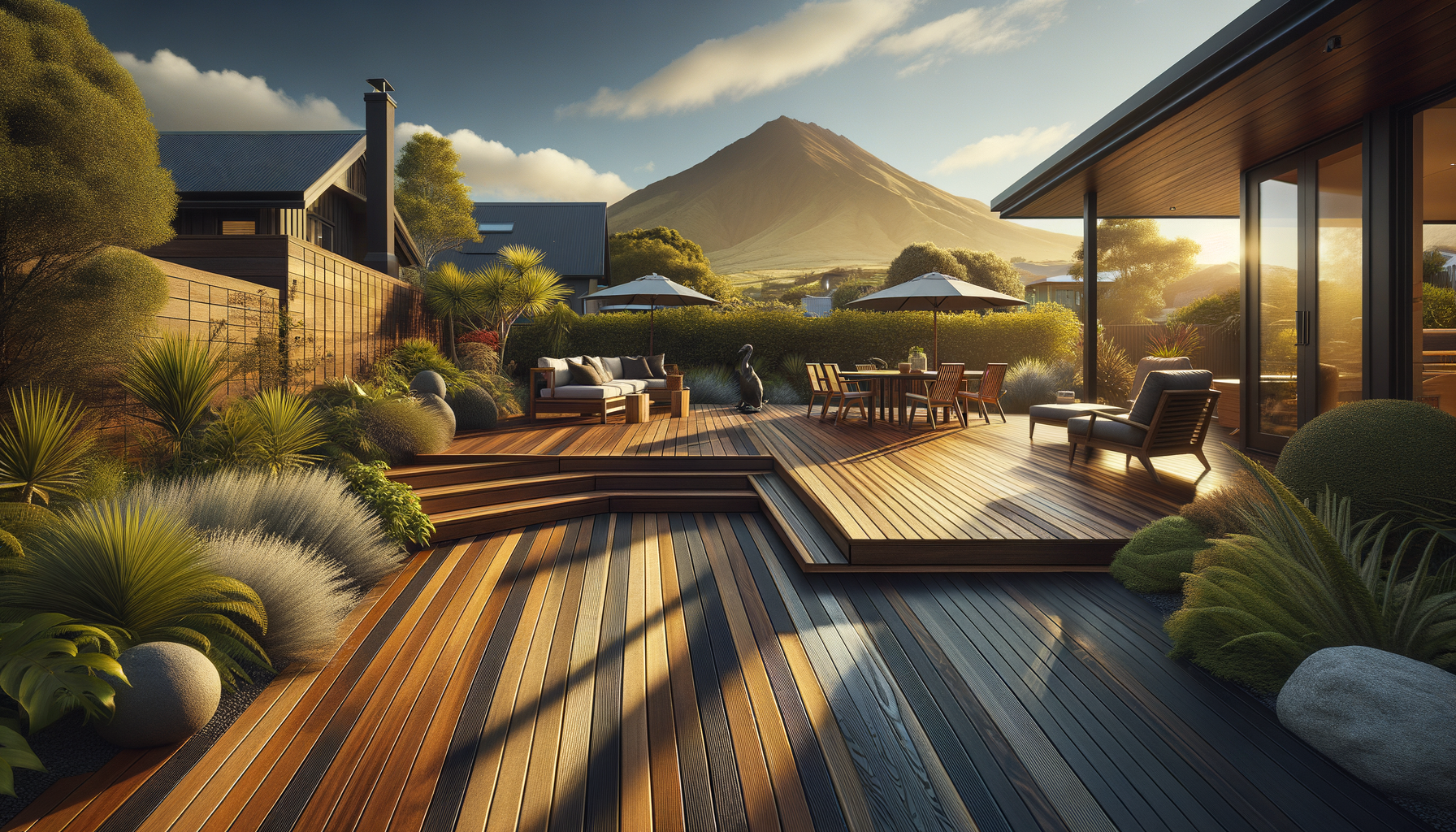
Composite decking has changed considerably over the past decade. What was once a product that looked plastic and felt nothing like timber has evolved into something genuinely impressive. Today's quality composite boards replicate the grain, texture, and tonal variation of natural wood with remarkable accuracy.
Composite is made from a blend of recycled wood fibre and plastic - often reclaimed from post-consumer sources like plastic packaging or timber mill waste. This manufacturing process prevents tens of thousands of tonnes of plastic and timber waste from ending up in landfill each year, which is worth keeping in mind if sustainability factors into your decision-making.
What Makes Composite Different
The core appeal of composite decking comes down to three things:
- Dramatically lower maintenance: No oiling, no staining, no sealing. An occasional wash with soapy water is genuinely all that's needed to keep most composite decks looking good. Annual maintenance costs typically run between just $5 and $15 - a fraction of what timber demands.
- Longer lifespan: Quality composite decks commonly last 25 years or more. Some premium capped composite and PVC systems carry warranties of up to 25 years from the manufacturer.
- Resistance to the elements: Composite doesn't rot, split, or warp the way timber can. It's also resistant to insect damage - an important consideration in some parts of New Zealand.
Composite Isn't Perfect
It's worth being clear-eyed about the limitations too. Composite decking typically costs more to purchase and install upfront than treated pine, though the gap narrows considerably when you factor in lifetime maintenance costs. Material costs for composite run roughly two to three times that of basic pine per square metre, though quality hardwood timber narrows that gap significantly.
Composite can also get hot underfoot on very sunny days, which may be a consideration if your deck gets full afternoon sun. And while the appearance has improved enormously, some people simply prefer the feel and aesthetic of genuine timber - that's a completely valid preference.
One other thing to watch: not all composite decking is equal. There's a significant quality range in the market. Cheaper composite products can be prone to fading, staining, and moisture absorption over time. Capped composite - where the core is enclosed in a protective polymer shell on all four sides - performs considerably better than uncapped alternatives, particularly in wet climates.
How Taranaki's Climate Affects the Decision
Taranaki sits in a sweet spot climatically - generally mild, with reasonable sunshine hours but also consistent rainfall and the influence of coastal air in many areas. For decking, this creates a few specific considerations:
- Moisture and rainfall: Taranaki's annual rainfall is generous, which accelerates the weathering of untreated or poorly maintained timber. Composite handles moisture well by comparison, as it doesn't absorb water the way wood does.
- Coastal proximity: Salt air is particularly hard on metal fasteners and certain timber species. If your home is within a few kilometres of the coast, stainless steel or hot-dip galvanised fasteners are essential regardless of which decking material you choose - and composite's resistance to salt and moisture becomes an even stronger advantage.
- Shade and mould: In shaded areas of your property, moisture lingers longer and mould, lichen, and algae become a real issue on timber decks. Composite is much easier to keep clean in these conditions.
Comparing the True Costs Over Time
The upfront cost comparison can be misleading. Here's a more complete picture for a typical medium-sized deck over a 25-year period:
Treated pine: Lower upfront, but factor in annual maintenance at $450 to $850 per year plus likely replacement at the 12 to 15-year mark, and the total cost of ownership is often higher than it appears.
Hardwood timber: Moderate to high upfront cost, ongoing maintenance similar to pine, and a longer lifespan if well maintained. Better value than pine over the long term, but still maintenance-intensive.
Quality composite: Higher upfront investment, but minimal ongoing costs and a lifespan that often means you won't need to replace it within the 25-year window. When the numbers are run honestly, composite frequently works out cheaper over the lifetime of the deck.
Questions to Ask Yourself Before Deciding
Rather than recommending one option over the other, it's more useful to think about what actually fits your situation:
- How much time do you want to spend on maintenance? If annual oiling and staining feels like a reasonable seasonal task you'll enjoy, timber might suit you well. If you'd rather spend that time on other things, composite makes life easier.
- How long do you plan to stay in the home? If you're thinking long-term, composite's lower lifetime cost and longevity become more compelling. If you might sell in five years, the upfront cost of composite may not return value as readily.
- What does the rest of your home look like? Some homes suit the warmth of natural timber perfectly. Others look better with the cleaner lines that contemporary composite profiles can offer.
- Is your deck in a particularly exposed or shaded spot? The more challenging the environment, the more composite's durability advantages come into play.
A Final Word on Quality
Whichever direction you go, quality matters enormously. A cheap composite product will disappoint in ways that a quality one won't. Similarly, a well-chosen and properly finished hardwood timber will outperform poorly maintained treated pine every time.
It's worth talking to experienced local installers who understand the specific conditions in your part of Taranaki - whether that's the coastal air around New Plymouth, the wetter inland areas toward the ranges, or a sheltered suburban section with plenty of shade. The right material for your deck depends on the specifics of your site, not just the general category of product you choose.
Both timber and composite have a genuine place in New Zealand outdoor living - the key is matching the material to your lifestyle, your environment, and your expectations about maintenance. Get that right, and your deck will be a space you're proud of for many years ahead.